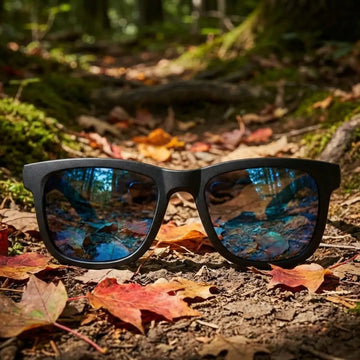
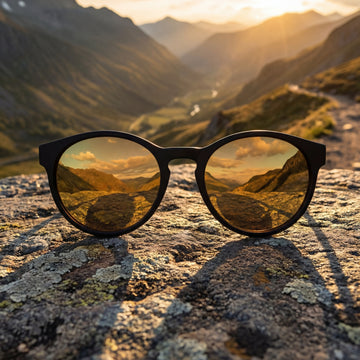
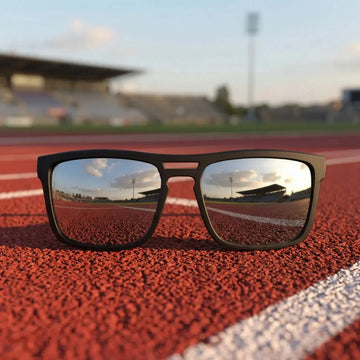
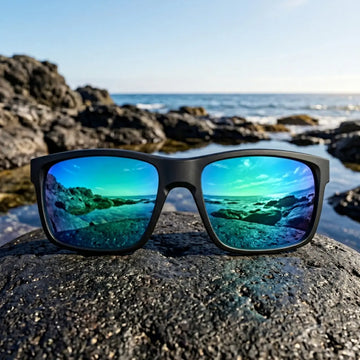
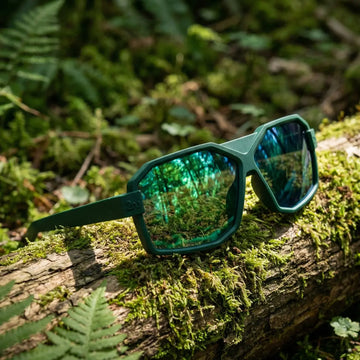
Lightweight running sunglasses can still slip because low frame mass does not replace a stable head-width match, balanced nose contact and comfortable temple support. Repeated movement and sweat can expose a weak fit that was not obvious during a short indoor try-on.
Lightweight helps, but fit still decides stability
Low weight is useful. Reducing frame mass can lower downward pull and make sunglasses less distracting during longer runs. It can also reduce the pressure created by a heavier or poorly balanced frame.
Weight is only one part of the system. A light frame can still move when it is too wide for the head, when the nose contact does not suit the wearer, or when the temple pressure is uneven. The useful buying question is therefore not “Is it light?” but “Does this exact frame remain stable without clamping?”
Standing still does not reproduce a run
Indoor try-ons are useful for an initial size check, but they do not reproduce normal head turns, looking down, pace changes or sweat. These movements can reveal small changes in position that were not visible in a mirror.
This matters during intervals, city runs and repeated direction checks, where comfort and retention are tested together. A frame that needs constant adjustment adds distraction even if it feels almost weightless when standing still.
Sweat can make a marginal fit easier to notice
As the nose and temple contact points become damp, a frame that was already close to slipping may move more readily. That does not mean every wet frame will slip, or that one material solves the problem for every wearer. The result depends on the exact frame, face shape, contact points and movement.
Do not assume a product uses a particular anti-slip material, adjustable nose pads or another fit component unless the specification for that exact model confirms it. Judge the finished frame and the real fit rather than relying on a generic material claim.
Use four checks instead of weight alone
- Head-width match: the frame should not feel loose, but it should not need excessive inward pressure.
- Nose contact: the frame should stay in a useful viewing position when the skin becomes warm and damp.
- Temple balance: pressure should feel even rather than concentrated at one point.
- Movement test: look down, turn the head and reproduce the actions you use on a normal run.
Lens choice is separate from frame retention
A secure frame does not decide the lens job. Lens choice should be based separately on UV400, visible-light comfort, glare, changing conditions and any watch or phone checks required on the route.
TVO is 2nu's non-polarized everyday outdoor lens. TVO Pro adds polarized glare reduction. Hexachroma is the flagship polarized lens family and helps maintain screen readability better than many polarized lenses while reducing the common blackout problem. Results can still vary by display, device and viewing angle, so test the setup you actually use. Compare the options in the 2nu Lens Difference guide.
Test the exact frame when fit is uncertain
Use the 2nu running collection to compare frame shapes and lens options, then confirm the specifications for the exact model you choose. Model names mainly describe frame shape, coverage and fit; they do not assign a unique sport function by themselves.
If fit remains the question, 2nu TryOn lets you test the same frame structure and core fit during real movement before committing to regular sunglasses. TryOn uses a basic UV400 lens configuration, so premium-lens visual effects and possible weight differences should be evaluated separately.
Running-sunglasses stability checklist
- Light enough for comfort, without treating weight as the only fit signal.
- Head-width match that feels secure without excessive clamping.
- Nose contact that remains useful after sweat builds.
- Balanced temple pressure during longer wear.
- No repeated adjustment during normal head turns or looking down.
- Lens choice matched separately to UV, glare, light and screen needs.
Frequently asked questions
Are lighter running sunglasses always more stable?
No. Low weight can reduce downward pull, but head width, nose contact, temple balance and movement still determine whether the exact frame stays in place.
Should running sunglasses clamp tightly?
They should feel secure without excessive pressure. A tight frame can still be the wrong shape, while a balanced frame can stay stable with less clamping.
Can one anti-slip material guarantee no movement?
No. Product materials and contact designs vary, and real stability also depends on the wearer's head shape, nose contact and movement. Check the exact model specification and test the finished frame.
After a sweaty run, follow the cleaning and storage steps in the 2nu Customer Care guide.